

Malaysia is planning different roles for its major ports
Malaysia's port-development strategy is becoming more clearly differentiated.
On 6 October 2026, Transport Minister Anthony Loke told Parliament that major ports along the Straits of Malacca would have distinct roles to reduce unnecessary duplication.
Port Klang would remain the country's main gateway and central transshipment hub.
The proposed Midport development in Port Dickson would focus on specialised cargo and marine support, while the Port of Tanjung Pelepas would continue serving the southern transshipment market. The Star
For logistics operators, this distinction matters more than simply knowing that additional port capacity is planned.
Port Klang remains Malaysia's principal container gateway
Port Klang handled approximately 15.14 million TEUs in 2025.
The government has highlighted existing capacity constraints, with utilisation exceeding 73%.
Westports' planned CT10–CT17 expansion is expected to increase its handling capacity to 28 million TEUs.
Combined with Northport, Port Klang's capacity is expected to reach approximately 34.2 million TEUs after the relevant expansion. The Star
These are projected handling capacities, not current annual throughput figures.
For logistics operators handling containerised imports and exports, Port Klang therefore remains a central location consideration.
Why the Carey Island terminal matters
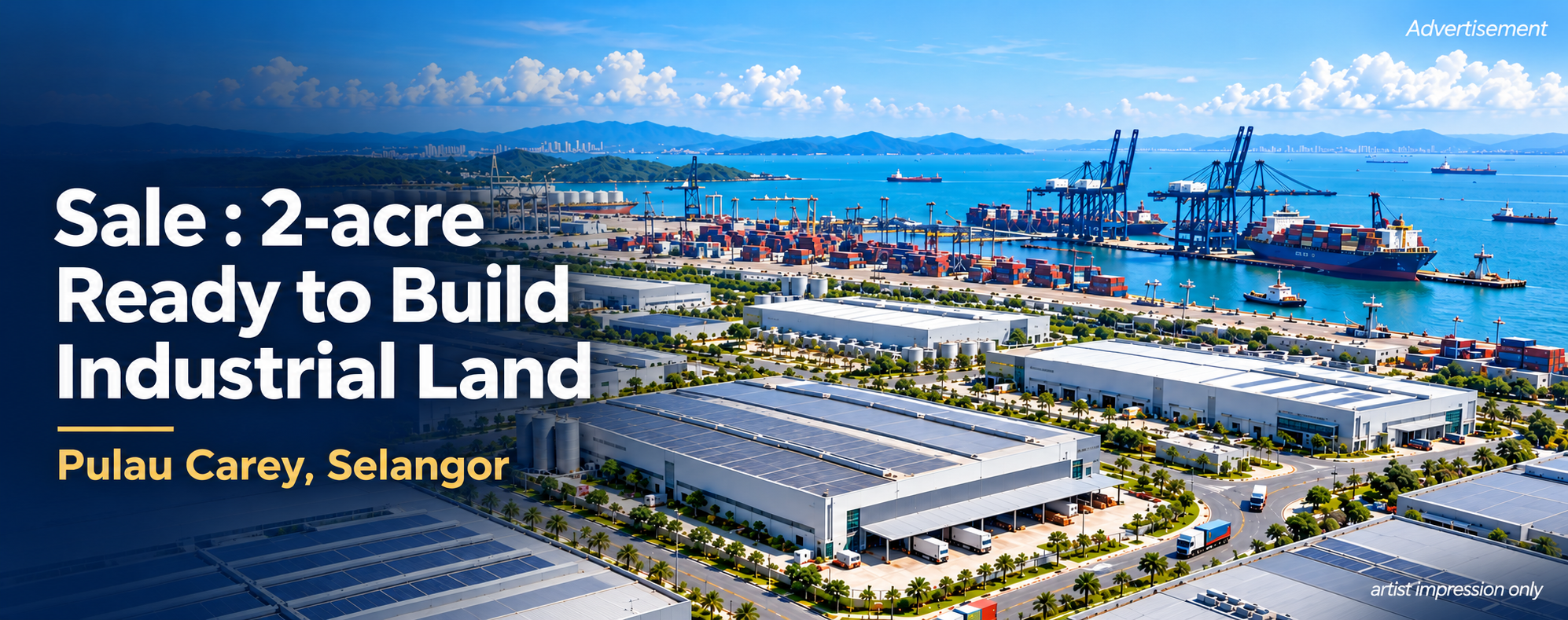
The proposed third terminal at Carey Island forms part of the longer-term Port Klang expansion strategy.
The government has indicated that the development will help address capacity constraints while supporting Malaysia's position in international maritime logistics.
However, the initial cargo focus and ultimate terminal configuration must be distinguished from the broader Port Klang expansion objectives.
The Carey Island project should not be treated as an already operational container terminal.
For warehouse operators, the commercial impact will depend on actual terminal commissioning, road connections, cargo services and customer demand.
Midport has a different role
Midport is a proposed privately developed port project in Port Dickson, Negeri Sembilan.
The government has described its intended role as supporting specialised cargo and marine-related activities rather than duplicating Port Klang's principal container functions.
The proposed development is also expected to incorporate automation and smart logistics systems. The Star
This distinction is important because specialised cargo operations may have very different land and warehouse requirements from conventional container distribution.
Examples can include:
- project cargo;
- heavy industrial equipment;
- specialised machinery;
- oversized components;
- marine-support activities;
- other cargo requiring dedicated handling arrangements.
The actual suitability of Midport for particular cargo types will depend on the final facilities, operating approvals and services available.
How port functions influence warehouse location
A warehouse should be selected around the movement of goods.
Consider two different operators.
Operator A: Containerised imports and distribution
This business receives imported goods in containers, stores inventory and distributes products throughout Klang Valley.
Its primary considerations may include:
- proximity to container terminals;
- container-haulage costs;
- highway connectivity;
- warehouse floor loading;
- loading bays;
- labour availability;
- distribution access.
Established industrial locations around Port Klang, Pulau Indah, Telok Gong and Klang may remain attractive.
Operator B: Specialised industrial cargo
This business handles oversized equipment, project cargo or heavy industrial components.
Its location requirements may be different.
Potential considerations include:
- specialised terminal facilities;
- heavy-load road access;
- storage yards;
- equipment handling;
- industrial customers;
- project delivery routes.
If Midport develops the relevant facilities, Port Dickson could become more relevant to certain specialised logistics activities.
However, that opportunity remains dependent on project implementation.
What about Negeri Sembilan's manufacturing growth?
Negeri Sembilan's industrial expansion is another factor.
The state's emerging manufacturing and digital-infrastructure clusters are increasing interest in Seremban, Nilai and Port Dickson.
RHB Investment Bank recently highlighted approximately 4,807 acres of available industrial land and growing activity in semiconductors, data centres and advanced manufacturing. BusinessToday
As industrial activity develops, supporting logistics requirements may increase.
These can include:
- raw-material storage;
- finished-goods distribution;
- industrial equipment handling;
- spare-parts warehousing;
- third-party logistics;
- project cargo.
The precise location of future logistics demand will depend on where factories become operational and which transport routes they use.
Port proximity is not the same as logistics efficiency
A warehouse located close to a port may appear attractive.
But physical distance is only one component of operating cost.
A logistics operator should also evaluate:
Transport time: How long do trucks actually take to reach the terminal?
Road restrictions: Are the routes suitable for the vehicles and cargo?
Congestion: Are there predictable delays during peak periods?
Handling requirements: Does the port provide the required facilities?
Customer geography: Where are the goods ultimately delivered?
Operating costs: What are the combined costs of haulage, storage, labour and handling?
A warehouse farther from the port may still offer better economics if it provides superior access to customers or more efficient operations.
Port Klang and Midport are not direct substitutes
The government's clarification reinforces an important point.
Port Klang's established container ecosystem and Midport's proposed specialised-cargo role serve different commercial needs.
For logistics operators, this means future industrial-property demand should not be evaluated using a single broad assumption about port expansion.


